A Wordy Life
I live a wordy life. I could read before I went to school and have consumed the written word voraciously ever since. It provides a singular joy, this magical ability to decode combinations of letters into words that create stories, provide information, educate and entertain. Words are such a compulsion that I even listen to audio books in the car and when I’m gardening, the sounds flowing over me, reminding me that words are alive and are meant to be heard as well as read.
As a sometimes-writer, I try to ensure I frame my writing so as to create coherent stories – both for myself and for potential readers. This goal meets with variable success, although I do read my work out loud to myself so that I can get a feel for its cadence. I focus on the words and try to get a feel as to whether they flow the way I want them to. I think it helps.
In this process I often think of Stephen King’s advice to not dress vocabulary up, since doing so is a bit like “dressing up a household pet in evening clothes. The pet is embarrassed and the person who committed this act of premeditated cuteness should be even more embarrassed.” So, with that in mind, I try not to stumble into the pitfall of unnecessarily complicated wordiness – unless it’s just for the fun of it!

Helping to set up a writing group last year and then attending regularly has been – and continues to be – an interesting aspect of my writing journey. We have about 8 group members who come and go depending on their commitments, travel and so forth. Each of us has different writing styles and long term objectives, but the mission goal for us all is to write regularly, even if it’s outside of our preferred genre or comfort zone, and to get better at it. The group consensus is that it’s all too easy to deprioritize writing in the absence of specific deadlines and feedback. This is where the writing group comes into play, providing motivation, making each of us feel accountable in our writing practise and providing peer feedback, along with a healthy dose of encouragement.
We turn up each fortnight, catch up on news and writing progress, then go around the table, taking it in turns to read out our homework assignments. These are usually on an agreed topic, which varies quite wildly from meeting to meeting and takes most of us right out of our comfort zones. A real challenge that’s emerged over the months is how to provide effective feedback on the writing that’s shared with the group. We’ve talked it through a number of times and agreed that it’s a process that requires everyone to ensure they focus on the writing, not the writer. We all try to be honest, but also diplomatic so that the process is constructive rather than destructive. So far this is a work in progress as everyone learns both how to give and to receive feedback without causing or taking offence
The group chose 500 word limit for our homework pieces specifically to help us hone our writing skills.by eliminating unnecessary ‘fluff’.. I found this to be quite a challenge to start with, but attending a micro fiction workshop a while ago reframed that for me. Participants were given a word limit of just 100 words per piece, which meant we had to make every-single-word count, avoiding all the usual things (cliches, verbiage, etc) and yet still have a clear arc to the story. Key to this, the facilitator said, was to infer more than is actually said. This allows the reader to engage more fully with the story, imagining it as bigger than the words on the page.
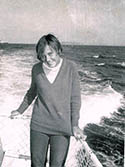
At 100 words that’s quite a challenge, but it did make me look more closely at my writing, remove redundancies and be grateful for the 500-word group limit! So it’s onwards and upwards – this time with the writing prompt of selecting a photo and then writing about what’s not shown in-shot. I’ve chosen one from the archives and will see where that takes me. Hmmm…